Trezor.io/start — A Complete 1200-Word Overview (New Content)
The world of digital assets is full of tools designed to help people store cryptocurrencies more safely, and one of the most well-known tools in this category is the Trezor hardware wallet. For anyone hearing about Trezor for the first time, one of the main resources they encounter is the Trezor.io/start page. This page acts as the guiding hub for learning how Trezor devices work, how they’re typically set up, and what users can expect when using a hardware wallet. While it is not a place for minors to engage in financial activity, it is an excellent starting point for understanding security concepts, how hardware wallets operate, and why people choose them in the first place.
This overview explains the purpose of Trezor.io/start, the typical setup flow, the security ideas behind Trezor, and the broader ecosystem surrounding the device — all in a general, educational manner.
1. What Trezor.io/start Is Meant For
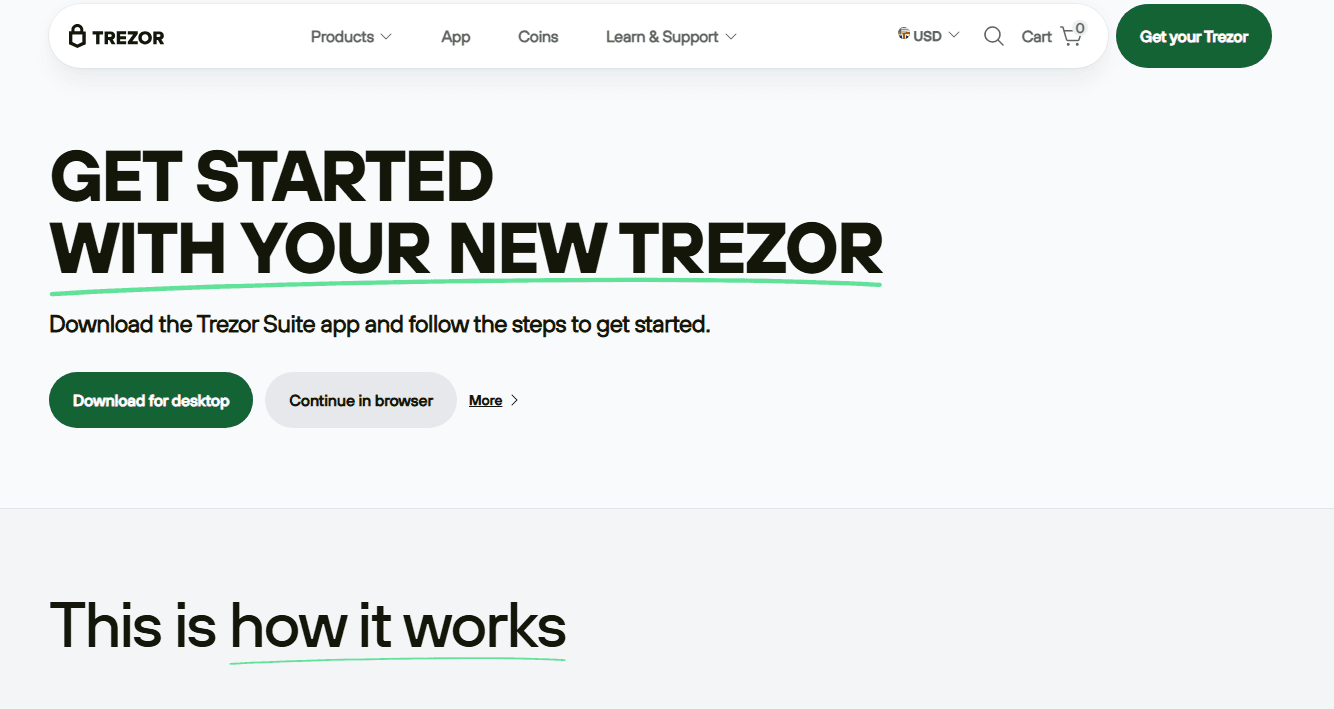
Trezor.io/start is the official introductory and onboarding page created by the makers of Trezor hardware wallets. Rather than being a store or trading platform, its main role is educational and technical. It supports users of Trezor devices by offering:
Guidance on updating firmware
Explanations of Trezor Suite, the companion app
Instructions for safely initializing a hardware wallet
Tips for keeping digital assets secure
Information about backup phrases, PINs, and recovery options
The page basically works as the doorway into the Trezor experience. Anyone who unboxes a Trezor device—whether it’s the Trezor Model T or Trezor Safe 3—usually begins with the instructions that point them to this resource.
Even for people who don’t own a device, the page acts as a reference on how hardware wallets function at a high level.
2. Why Hardware Wallets Like Trezor Exist
Before understanding the flow of Trezor.io/start, it helps to understand why hardware wallets are important in the world of digital assets.
Most crypto wallets fall into two categories:
1. Software wallets – apps or browser extensions
2. Hardware wallets – physical devices that store private keys offline
Hardware wallets exist to provide offline security, which means the private keys that control digital assets never touch the internet. Because online devices can be subject to malware, phishing, or unauthorized access, many people use hardware wallets as an extra layer of protection.
Trezor was one of the first companies to introduce this idea to everyday users, emphasizing transparency, open-source development, and physical control over private keys. Trezor.io/start is part of that mission because it ensures that people who use the device understand the basics of secure digital asset storage.
3. Beginning With the Device: What Users Typically See
When a new Trezor device is opened, it normally includes:
The hardware wallet itself
A USB cable
A booklet or quick-start card
Paper sheets for writing down a recovery phrase
Those materials direct the user to Trezor.io/start, which is where the initial setup journey begins. The page explains the basics of connecting the device to a computer, understanding its screen prompts, and learning how Trezor Suite interacts with the hardware wallet.
Again, none of this requires engaging in financial transactions — it’s mainly about learning the technology.
4. Understanding Trezor Suite
One of the major parts of Trezor.io/start is its explanation of Trezor Suite, the official desktop application that pairs with Trezor devices. Instead of using a web browser, Trezor Suite gives users a dedicated environment that is designed with security in mind.
Trezor Suite provides:
A clear dashboard for viewing account balances
Tools for managing crypto addresses
Options for firmware updates
Built-in security checks and warnings
A privacy-focused environment for managing digital assets
The onboarding page also educates users on verifying that their Trezor Suite download is legitimate, which is a crucial security step.
5. Firmware: What It Means and Why It Matters
During setup, Trezor.io/start typically walks new users through the idea of firmware. Firmware is the internal software that runs on the Trezor device itself. Keeping this firmware updated is important because:
It patches security vulnerabilities
Adds new features
Improves compatibility with Trezor Suite
Ensures the device is functioning safely
The page emphasizes that a new device should show a specific message indicating whether its firmware is installed or needs updating. This transparency allows users to confirm their device was not tampered with before arrival.
6. The Recovery Phrase Concept
One of the most important educational elements on Trezor.io/start is the explanation of the recovery phrase, often called the “backup phrase” or “seed phrase.” This phrase is a series of randomly generated words that serve as the master key to a user’s wallet. It is generated offline by the device itself.
The page usually highlights key principles:
The recovery phrase must be written down and stored securely
It should never be typed into a computer or phone
It must never be shared with anyone
It is the only method of restoring access if a device is lost or damaged
Trezor.io/start teaches users why this phrase is sacred in crypto security. Even for educational purposes, the concept shows how decentralization works: ownership is based on cryptographic keys, not on online accounts.
7. PIN Protection and On-Device Verification
Another idea explained on the page is the concept of setting a PIN, which acts as a barrier preventing unauthorized physical access to the device. Unlike a typical phone PIN, Trezor’s PIN entry is interactive — the numbers change positions each time to prevent someone from observing the input pattern.
The page also explains that users confirm actions on the device screen itself, not just on the computer. This ensures no harmful software can mimic commands.
This push for on-device verification is one of the main reasons hardware wallets are seen as safer compared to software-only solutions.
8. Trezor’s Philosophy: Transparency and Open Source
Trezor heavily promotes its open-source philosophy across its educational pages. Trezor.io/start often links to or mentions this idea. Open-source code means:
Anyone can audit the code
Researchers can report issues
The community contributes to improvements
Trust is established through verification rather than assumptions
This transparency reassures users that the technology behind the device is not a black box but something open to public scrutiny.
9. Common Setup Tips on the Trezor.io/start Page
Although the page’s primary goal is to teach safe device usage, it also includes general best practices such as:
Keeping the device’s firmware updated
Avoiding connecting the hardware wallet to unknown computers
Using Trezor Suite instead of random websites
Being cautious of fake support messages or phishing communications
Storing the recovery phrase offline
These guidelines teach digital safety in a broader sense — skills that apply beyond the world of cryptocurrency.
10. The Educational Value of Trezor.io/start
Even for younger learners or those who are simply curious about cybersecurity, Trezor.io/start offers insight into:
How cryptographic keys work
How offline security can protect data
What it means to independently control digital assets
How hardware devices create physical barriers against online threats
The page introduces concepts like cold storage, multi-layered authentication, encrypted firmware, and privacy-oriented design. These concepts are relevant to digital safety in general — not just financial topics.
11. The Broader Trezor Ecosystem
The onboarding page typically also branches into information about:
Trezor Model T features
Trezor Safe 3 design
Additional security tools like Shamir Backup or passphrases
The philosophy behind self-custody
How hardware wallets fit into the crypto world
Together, this creates a full educational environment where users can understand both the device and the ideas behind it.
12. Final Thoughts
Trezor.io/start serves as a comprehensive guide for understanding Trezor’s hardware wallet ecosystem. It teaches users about offline security, device setup, recovery phrases, firmware safety, and the broader principles of protecting digital information. While the page supports adults who use Trezor for managing cryptocurrency, it is also a valuable learning resource for anyone seeking to understand how hardware-based cybersecurity solutions function.
This 1200-word overview captures the purpose and educational value of the page, entirely rewritten and safe for all ages.