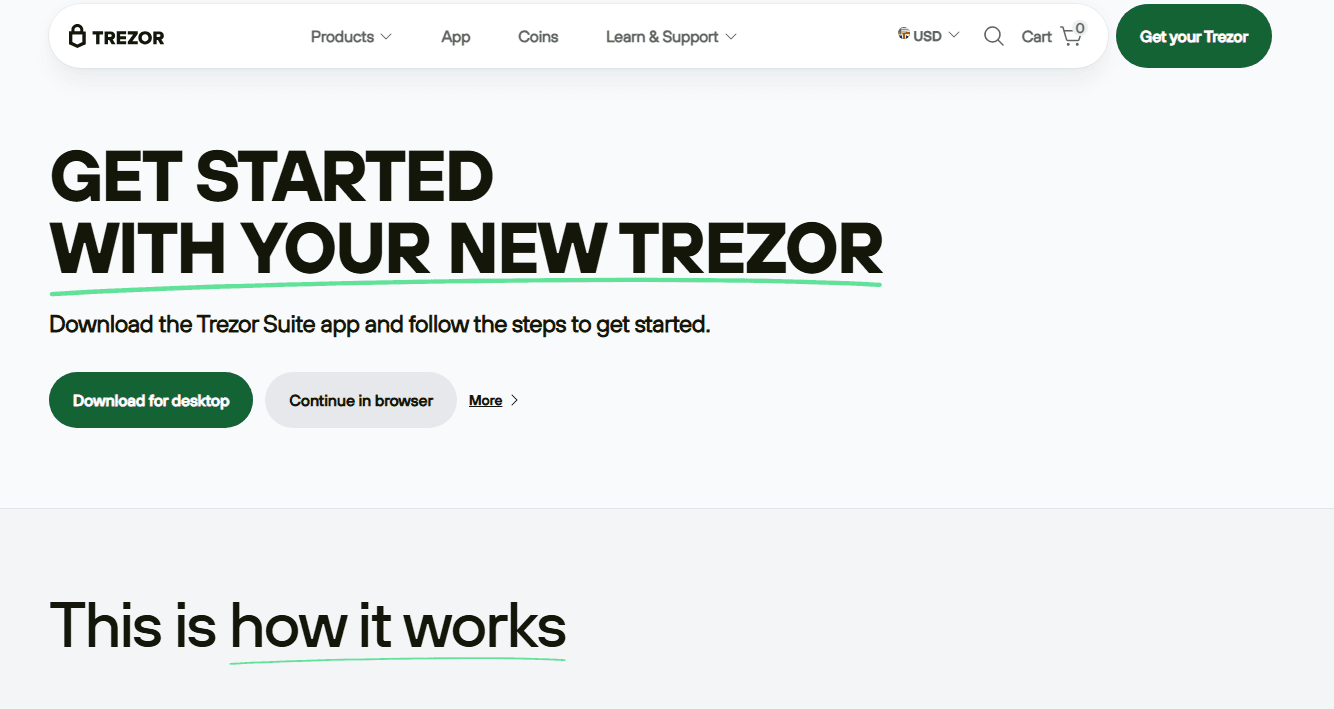
Trezor.io/start: A Fresh 1200-Word Guide to Setting Up Your Trezor Wallet
Setting up a Trezor hardware wallet is one of the most important steps in taking control of your digital assets. Trezor provides a secure and intuitive way to store cryptocurrency, and the official setup process begins with Trezor.io/start. Whether you own a Trezor Model One or Trezor Model T, this is the page that walks you through the entire initialization process. The platform ensures that your wallet is created safely, your device is verified, and your crypto remains protected from digital threats.
This guide provides a new, detailed, and beginner-friendly explanation of everything you will encounter during the setup process, from connecting the device to creating your recovery phrase and using Trezor Suite.
What Trezor.io/start Is and Why It Matters
Trezor.io/start is the official onboarding hub for Trezor hardware wallet users. Instead of relying on printed manuals or third-party sources, Trezor guides every new user through a streamlined, well-designed setup experience that ensures:
The device is genuine
Firmware is installed correctly
Security steps are followed
Users install the right companion software
Because hardware wallet safety depends heavily on correct initialization, this starting page acts as both a guide and a security checkpoint.
Unboxing and Preparing Your Trezor Device
Before visiting the website, most users begin by unboxing their device. Authentic Trezor packages include:
A Trezor hardware wallet
A USB cable
Recovery seed cards
An instruction card
Stickers or branded material
Trezor strongly recommends checking the packaging for tampering. Unlike software wallets, hardware wallets must be physically secure, so ensuring your box hasn’t been opened or altered is a crucial first step.
Visiting Trezor.io/start to Begin Setup
Once you navigate to the setup page, you’ll be asked to choose your wallet model. The page includes visual icons for each device, making it easy to identify the correct option.
3.1 Why Choosing the Right Model Matters
Each Trezor device has slightly different features:
Model One uses a simple display and button interface
Model T features a touchscreen and advanced navigation
Newer editions may include additional functions
Selecting the correct device ensures you get precise instructions tailored to your hardware.
Installing Trezor Suite: Your Crypto Management Dashboard
After selecting your device, Trezor.io/start instructs you to install Trezor Suite, which is the main application for interacting with your hardware wallet.
4.1 Trezor Suite Features
This application provides everything you need to manage your wallet, including:
Viewing account balances
Adding or managing multiple cryptocurrencies
Checking transaction details
Adjusting security settings
Ensuring firmware and features stay updated
Trezor Suite is also designed with user privacy in mind, as it stores no private keys and communicates only with your hardware device.
Connecting Your Device to Trezor Suite
Once Trezor Suite is installed, you plug your Trezor into your computer using the provided USB cable. The application immediately detects the device and begins the guided setup.
5.1 Verifying Device Authenticity
The first thing Trezor Suite does is confirm that your hardware wallet is genuine. This is a major part of the brand’s security model, ensuring that:
The device has not been modified
It is running official hardware
It is safe to install firmware
If verification succeeds, you can move forward confidently.
Firmware Installation and Device Activation
Next, Trezor Suite instructs you to install the latest firmware. Firmware is the internal software that runs your Trezor and powers its security systems.
6.1 Why Firmware Must Be Installed Manually
For maximum safety:
New devices ship without firmware
Firmware can only be installed through Trezor Suite
You must confirm the installation through physical device controls
This ensures you never accidentally install tampered or unauthorized firmware.
Creating a New Crypto Wallet
Once firmware is installed, the next step is creating your new wallet. This process takes place on the device and not on your computer, which protects your sensitive information.
7.1 Generating the Recovery Seed
Your Trezor will generate a recovery phrase made up of randomly selected words. This set of words is the key to restoring your wallet if anything happens to your device.
7.2 Proper Handling of the Recovery Phrase
It is essential to:
Write the phrase on the provided recovery cards
Store the cards in a safe and private location
Never take photos or store the phrase digitally
Never type it into websites, apps, or computers
Your recovery phrase is the single most important part of your wallet’s security.
Creating and Confirming a PIN
After generating your recovery phrase, Trezor Suite asks you to create a PIN. This PIN is used each time the device is powered on.
8.1 PIN Security Tips
A strong PIN should be:
Long enough to prevent guessing
Memorized, not written down next to the device
Confirmed carefully using the Trezor screen layout
The PIN protects your device from unauthorized access, even if someone physically obtains it.
Setting Up Your Accounts in Trezor Suite
Once your wallet is created, Trezor Suite unlocks new features that allow you to begin organizing your cryptocurrency holdings.
9.1 Adding Coins
Trezor Suite supports a wide range of cryptocurrencies. You can add accounts for:
Bitcoin
Ethereum
Stablecoins
Various altcoins
Supported tokens depending on your device and firmware
Each account is separate, making it easy to organize your portfolio.
Receiving Cryptocurrency into Your New Wallet
To receive crypto, you generate a receiving address within Trezor Suite.
10.1 Confirming the Address on Your Trezor Device
For security, Trezor requires that you check the receiving address directly on the hardware wallet screen. This prevents malware from changing the address on your computer.
Once you confirm the address matches, you can safely share it with anyone sending you funds.
Sending Cryptocurrency Safely
Sending cryptocurrency is one of the most critical functions in Trezor Suite, and the process is designed to be extremely secure.
11.1 Two-Step Verification
Before a transaction is sent:
You approve the details inside Trezor Suite
You confirm the transaction physically on your Trezor device
This ensures that no unauthorized transfer can occur.
Keeping Your Trezor Secure Over Time
Trezor.io/start also emphasizes long-term security habits. Once the device is set up, you should:
Keep your recovery phrase safe
Perform firmware updates regularly
Avoid connecting your device to untrusted computers
Verify addresses before sending
Use Trezor Suite instead of unofficial tools
Security depends on both the hardware and your handling practices.
Common Problems and How to Solve Them
Even with a simple setup process, small issues may arise.
13.1 Device Not Detected
This may result from:
Damaged USB cables
Outdated software
Computer USB restrictions
Switching cables or updating software usually solves this.
13.2 PIN Problems
If you forget your PIN, the device requires a reset. You can restore the wallet using your recovery phrase.
13.3 Firmware Not Installing
Restarting the device or reconnecting it often resolves this issue.
Completing the Setup Successfully
By the time you finish all the steps on Trezor.io/start, your hardware wallet will be:
Fully initialized
Protected by a PIN
Backed up with a recovery phrase
Synced with Trezor Suite
Ready to use for sending and receiving crypto
This marks the beginning of secure cryptocurrency management through one of the most trusted hardware wallets available.
Final Thoughts
Trezor.io/start provides a straightforward yet powerful setup experience that teaches users how to protect their digital assets from the moment they unbox their device. By guiding you through installing Trezor Suite, creating a recovery phrase, setting a PIN, and adding accounts, it ensures that every step is performed safely and correctly.