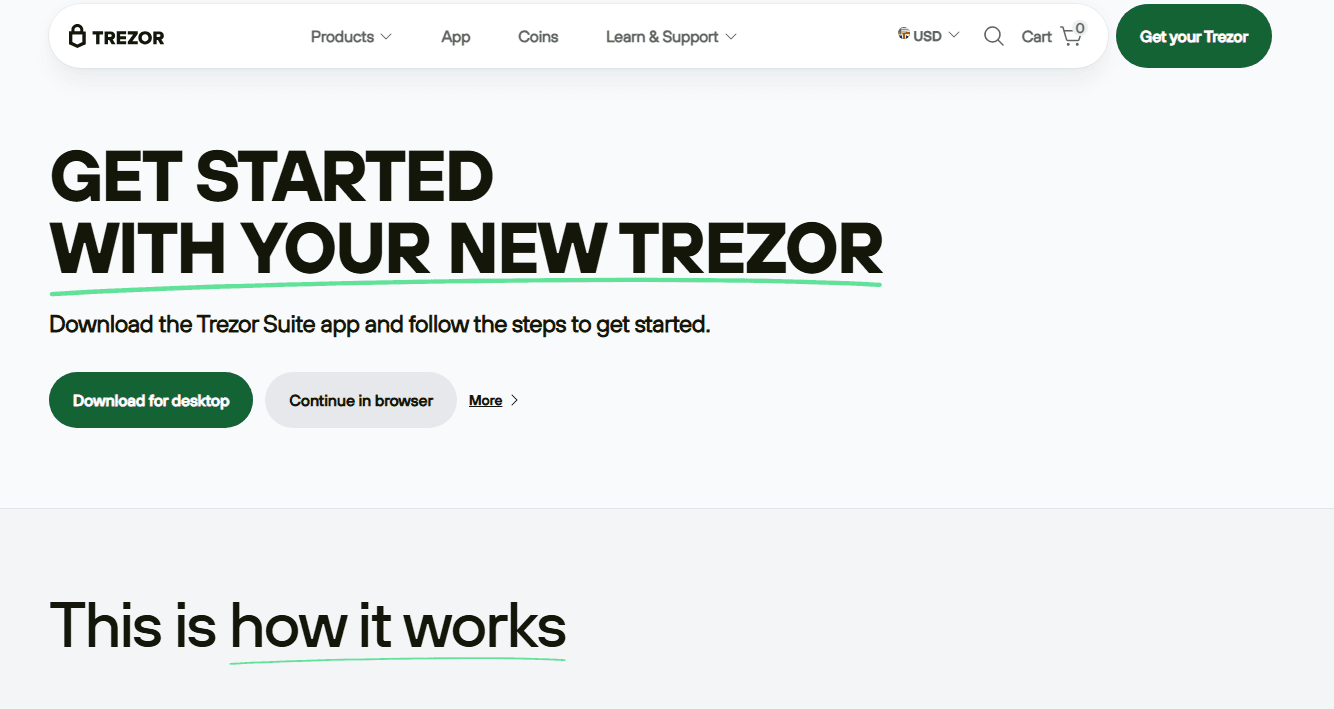
Trezor.io/start: A Complete 1200-Word Guide to Setting Up Your Trezor Device
Trezor is one of the most recognized names in the world of cryptocurrency security. Designed as a hardware wallet, Trezor helps users protect digital assets by keeping private keys offline and out of reach from online threats. If you have a Trezor Model One or Trezor Model T, your first step toward using it begins at Trezor.io/start. This guide explains everything you need to know about that starting point—how setup works, how security is managed, what features you gain access to, and how to keep your device safe.
Understanding the Purpose of Trezor.io/start
Trezor.io/start is the official setup portal for all new Trezor hardware wallets. Instead of using printed manuals or confusing instructions, Trezor uses this centralized setup page to ensure that users:
Initialize their device correctly
Install essential software
Create new wallets safely
Update firmware securely
Learn the basics of device operation
The page ensures people are using genuine Trezor devices and getting their information directly from the source.
Taking the First Steps with Your Trezor Device
Before diving into technical steps, it’s useful to know what comes inside your Trezor package. Usually, you will find:
The Trezor hardware wallet
A USB cable
Recovery phrase cards
A quick-start card
Stickers and basic materials
Trezor recommends verifying the packaging for tampering. The device should arrive sealed and untampered with. This is important because a hardware wallet must always be trusted and physically secure.
Visiting Trezor.io/start
When you access Trezor.io/start, the page guides you through selecting your device model. Each model may have small differences in installation steps, display layout, or connection method, so choosing the correct one ensures precise instructions.
3.1 Choosing the Correct Device
You will typically select:
Trezor Model One,
Trezor Model T,
or any newly released model available in the lineup.
Once selected, you are directed to download the appropriate application or interface needed for your computer.
Installing Trezor Suite
To manage your Trezor hardware wallet, the main software you’ll use is Trezor Suite. This is a desktop and mobile-friendly application designed to connect your device to your computer and safely manage your crypto assets.
4.1 Why Trezor Suite Is Essential
Trezor Suite allows you to:
View balances
Receive and send crypto
Manage accounts
Update firmware
Access advanced features like coin control and labeling
It is designed to work only with your physical device present, making it extremely secure.
4.2 Downloading Trezor Suite
The setup page provides installation for multiple operating systems, ensuring compatibility with most computers. Once installed, you open the application to begin device setup.
Connecting Your Trezor to the Computer
Once Trezor Suite is installed, you connect your device using the USB cable. Trezor Suite will automatically recognize the device and begin guiding you through setup.
5.1 Initial Recognition
If your device is new, Trezor Suite will show messages such as:
“New device detected”
“Initialize your Trezor”
These messages confirm your device is ready for configuration.
5.2 Safety Check
Trezor Suite performs authenticity checks to verify that your hardware wallet is genuine. This ensures you are not using a counterfeit or compromised device.
Installing Firmware
All new Trezor devices require firmware installation before use. Firmware is the operating system of your Trezor wallet, and installing it ensures your device is running the latest security upgrades.
6.1 The Importance of Firmware
Firmware updates provide:
Stronger security
Support for new cryptocurrencies
Improved device stability
Better user experience
During installation, you must confirm actions on the physical device to ensure everything happens securely and intentionally.
Creating a New Wallet
Once firmware installation is complete, the next major step is creating a new cryptocurrency wallet. This is where your recovery phrase (sometimes called a seed phrase) comes into play.
7.1 What the Recovery Phrase Is
The recovery phrase is a list of words generated by your Trezor device. These words:
Represent your wallet’s private keys
Allow you to recover your wallet on any Trezor device
Must be written down offline
Only you should know these words.
7.2 How to Store Your Recovery Phrase
Never enter the phrase into a computer, phone, or online website. Write it on the provided recovery cards or another secure medium. Keep it somewhere safe and never photograph it or share it digitally.
Setting a PIN for Your Device
Next, Trezor Suite will ask you to set up a PIN. This PIN protects your hardware wallet in case someone tries to physically use it.
8.1 PIN Guidelines
A secure PIN should:
Be difficult to guess
Be memorable for you
Never be written on the device or kept next to it
You confirm the PIN directly on the Trezor screen, ensuring no one can intercept it from your computer.
Exploring Trezor Suite After Setup
Once the wallet is created and the PIN secured, you gain full access to Trezor Suite’s dashboard.
9.1 Main Dashboard Features
The interface commonly shows:
Asset overview
Account list
Transaction history
Current market values
Tools for receiving and sending crypto
You can also personalize your settings inside the suite.
9.2 Managing Multiple Accounts
Trezor Suite supports multiple cryptocurrencies and allows users to create several accounts for different purposes—such as savings, business use, or testing.
Receiving Cryptocurrency
To receive assets, you generate receiving addresses inside Trezor Suite.
10.1 Verifying Addresses
A major security feature is address verification. Trezor displays the receiving address on the hardware wallet screen to ensure it matches what appears on your computer. This prevents malware from altering addresses.
Sending Cryptocurrency
When you send cryptocurrency, Trezor requires two confirmations:
Approving the transaction in Trezor Suite
Physically confirming it on your Trezor device
This dual confirmation prevents unauthorized transfers even if your computer is compromised.
Keeping Your Device Secure
Using Trezor safely means following several ongoing security habits:
Keep your PIN secret
Store your recovery phrase in a secure place
Regularly update firmware
Never type your recovery phrase into digital devices
Use Trezor Suite rather than third-party tools
Proper safety practices ensure your crypto remains secure over time.
Troubleshooting Common Issues
Even with proper setup, users sometimes encounter minor issues.
13.1 Device Not Recognized
Possible causes:
USB cable issues
Outdated Suite version
Blocked device drivers
Updating the app or switching cables often resolves this.
13.2 Incorrect PIN Attempts
Entering the wrong PIN repeatedly resets the device. You can still recover your wallet using your recovery phrase.
13.3 Firmware Installation Errors
These may require rebooting the device or reconnecting it to your computer.
Final Thoughts
Trezor.io/start is the gateway to a secure crypto experience. By following its instructions, users can correctly set up their hardware wallet, safely store backup phrases, and confidently begin managing digital assets through Trezor Suite. The process is designed to be clear, guided, and highly secure, giving users full control over their assets without relying on online accounts or centralized systems.